Teaching and Learning Experience Sharing (TALES) Seminar Series (2025/26 Semester 2)
Intended Learning Outcomes
At the end of TALES, participants will be able to:
- Describe the HKBU Graduate Attributes and their importance in the OBTL implementation;
- Develop constructively aligned Intended Learning Outcomes (ILOs), Teaching and Learning Activities (TLAs) and Assessment Methods (AMs) for their respective courses;
- Experiment with new and innovative teaching activities through the deployment of eLearning.
Outline
Workshop Details
Facilitators:
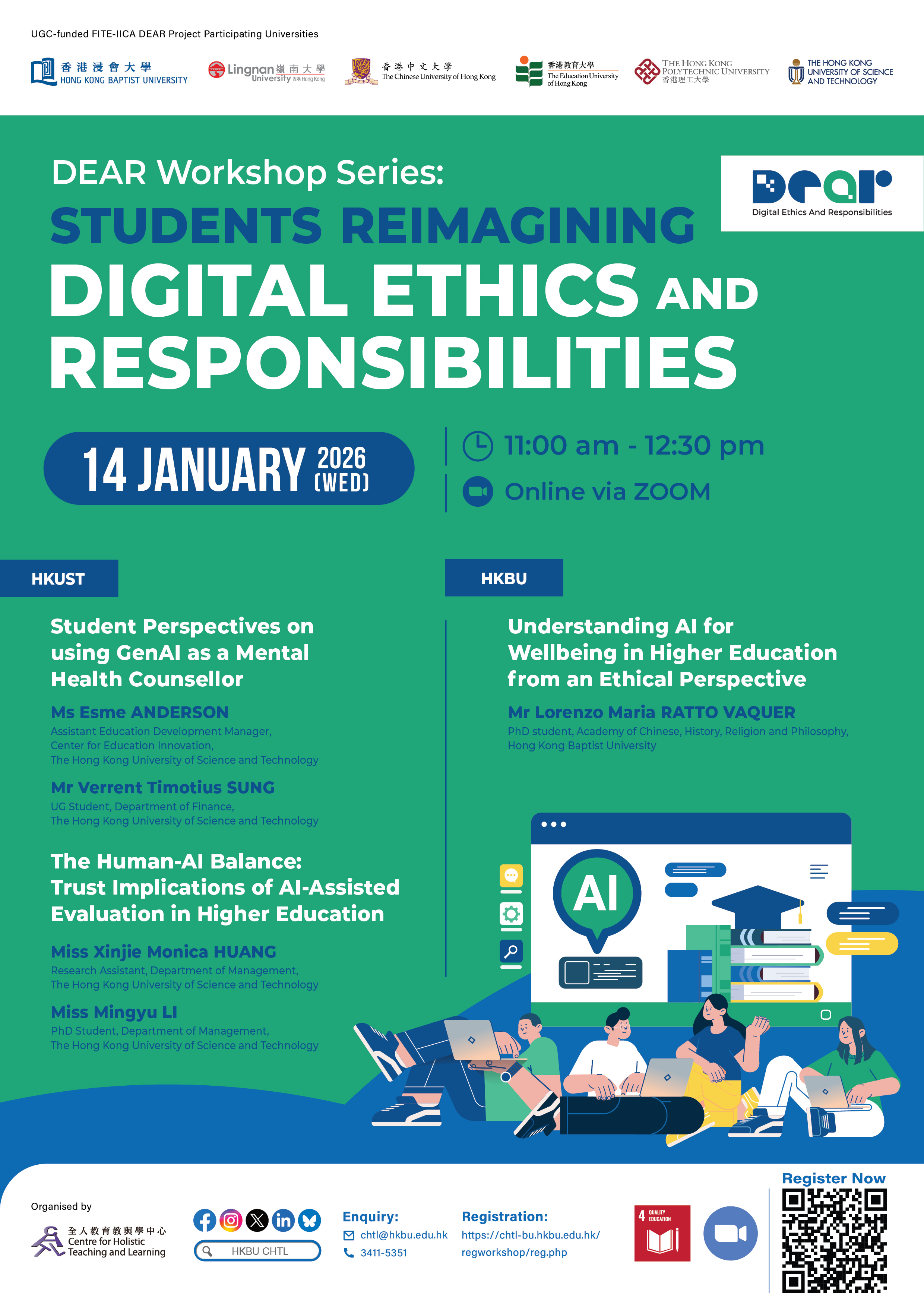
Ms Esme ANDERSON
Assistant Education Development Manager
Center for Education Innovation,
The Hong Kong University of Science and Technology
Mr Verrent Timotius SUNG
UG Student, Department of Finance,
The Hong Kong University of Science and Technology
Miss Xinjie Monica HUANG
Research Assistant, Department of Management,
The Hong Kong University of Science and Technology
Miss Mingyu LI
PhD Student, Department of Management,
The Hong Kong University of Science and Technology
Mr Lorenzo Maria RATTO VAQUER
PhD student, Academy of Chinese, History, Religion and Philosophy,
Hong Kong Baptist University
Abstract:
Student Perspectives on using GenAI as a Mental Health Counsellor
Ms Esme ANDERSON and Mr Verrent Timotius SUNG
This student-initiated project sheds light on a critical aspect of university life and responsibility - mental health - by exploring HKUST students' perspectives on using Generative AI (GenAI) as a mental health counselor. An initial survey revealed that while many students are open to using GenAI for counseling or venting, concerns about bias and inaccurate responses persist. Follow-up qualitative interviews uncovered that cultural and family stigma around mental health may lead students to turn to GenAI, particularly in an increasingly digital society where personal connections are increasingly fragmented. In his sharing, Verrent will unpack these responses and invite ideas and interpretations from workshop participants.
The Human-AI Balance: Trust Implications of AI-Assisted Evaluation in Higher Education
Miss Xinjie Monica HUANG and Miss Mingyu LI
This project addresses a critical gap: how students respond to faculty use of Generative AI (GenAI) in assessment. Across a series of experiments utilizing status attribution in workplace and educational contexts, this project has explored and uncovered how an individual using AI can be perceived as less competent, which, in turn, leads to a loss of perceived status. At HKUST, we conducted a survey of 602 students, assessing their views on faculty competence, satisfaction, and status in scenarios involving AI use in marking assessments. Findings indicate that students perceive faculty who use AI for evaluation as less competent and are less likely to recommend their courses, highlighting the complex implications of AI adoption in education and the importance of considering student perspectives in its implementation.
Understanding AI for Wellbeing in Higher Education from an Ethical Perspective
Mr Lorenzo Maria RATTO VAQUER
This talk will present a theoretical framework for wellbeing in the age of AI that brings together Amartya Sen’s capability approach and Shannon Vallor’s notion of moral deskilling. It starts from a definition of wellbeing as the expansion of capabilities, i.e. the real freedoms to be and to do what one has reason to value. I distinguish between wellbeing achievements, the outcomes actually attained, and wellbeing freedom, the genuine opportunities to obtain them. From this, AI is seen as an entity that reshapes capability sets depending on conversion factors: the personal, social, and environmental conditions that determine whether a technology becomes lived freedom.
Moral deskilling, as presented by Vallor, poses a primary threat to wellbeing freedom. When AI structures perception in advance, shapes choice environments, and automates inquiry and judgment, it can weaken core human capabilities such as practical reason, authorship, and affiliation. This can produce a twofold pattern: greater achievements in terms of speed, accuracy, and personalization, alongside reduced freedoms in terms of autonomy, dignity, and the capacity for public reasoning. AI supports wellbeing when it serves as scaffolding that invites the exercise of discernment, dialogue, and responsible self-direction, rather than replacing them.
I propose a capability-based criterion for evaluating AI: its value depends on whether it durably expands opportunities to deliberate well, to participate in the shared authorship of common worlds, and to contest decisions that affect one’s life. The implications for higher education follow consequently. If the aim of education is to cultivate wellbeing freedom, then practices, rules, and forms of AI governance should be designed to support the exercise of practical reason, responsibility in the use of the technology. The decisive question is not how AI can boost educational outputs, but how it can help people and institutions to live, learn, and reason well together.
Sustainable Development Goals (SDG) Mapping

Facilitators:
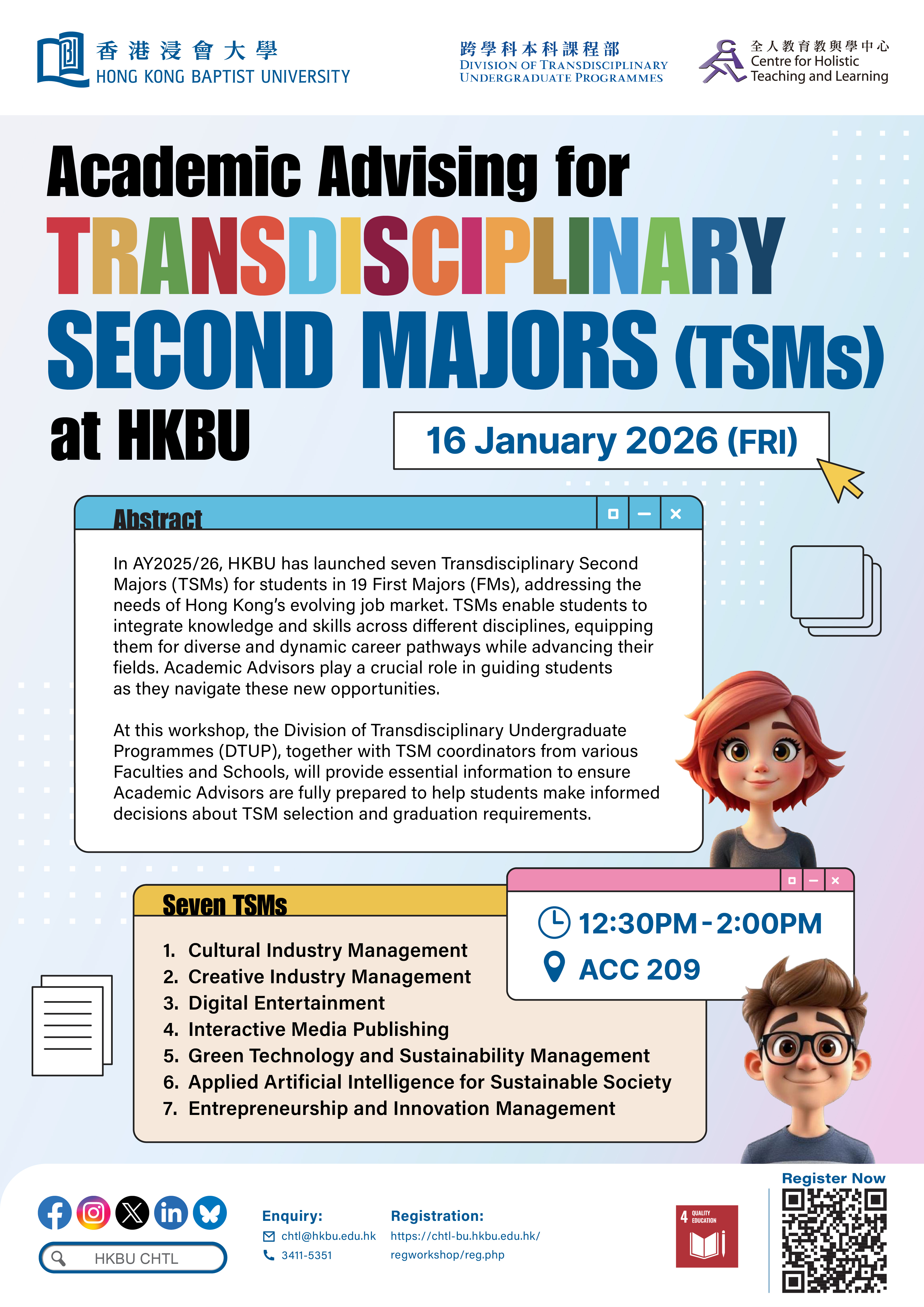
Dr Glos HO
Director of DTUP
TSM coordinators
Abstract:
In AY2025/26, HKBU has launched seven Transdisciplinary Second Majors (TSMs) for students in 19 First Majors (FMs), addressing the needs of Hong Kong’s evolving job market. TSMs enable students to integrate knowledge and skills across different disciplines, equipping them for diverse and dynamic career pathways while advancing their fields. Academic Advisors (AAs) play a crucial role in guiding students as they navigate these new opportunities.
At this TALES workshop, the Division of Transdisciplinary Undergraduate Programmes (DTUP), together with TSM coordinators from various faculties and schools, will provide essential information to ensure academic advisors are fully prepared to help students make informed decisions about TSM selection and graduation requirements.
TSMs:
- Cultural Industry Management
- Creative Industry Management
- Digital Entertainment
- Interactive Media Publishing
- Green Technology and Sustainability Management
- Applied Artificial Intelligence for Sustainable Society
- Entrepreneurship and Innovation Management
Sustainable Development Goals (SDG) Mapping
Facilitators and Abstract:
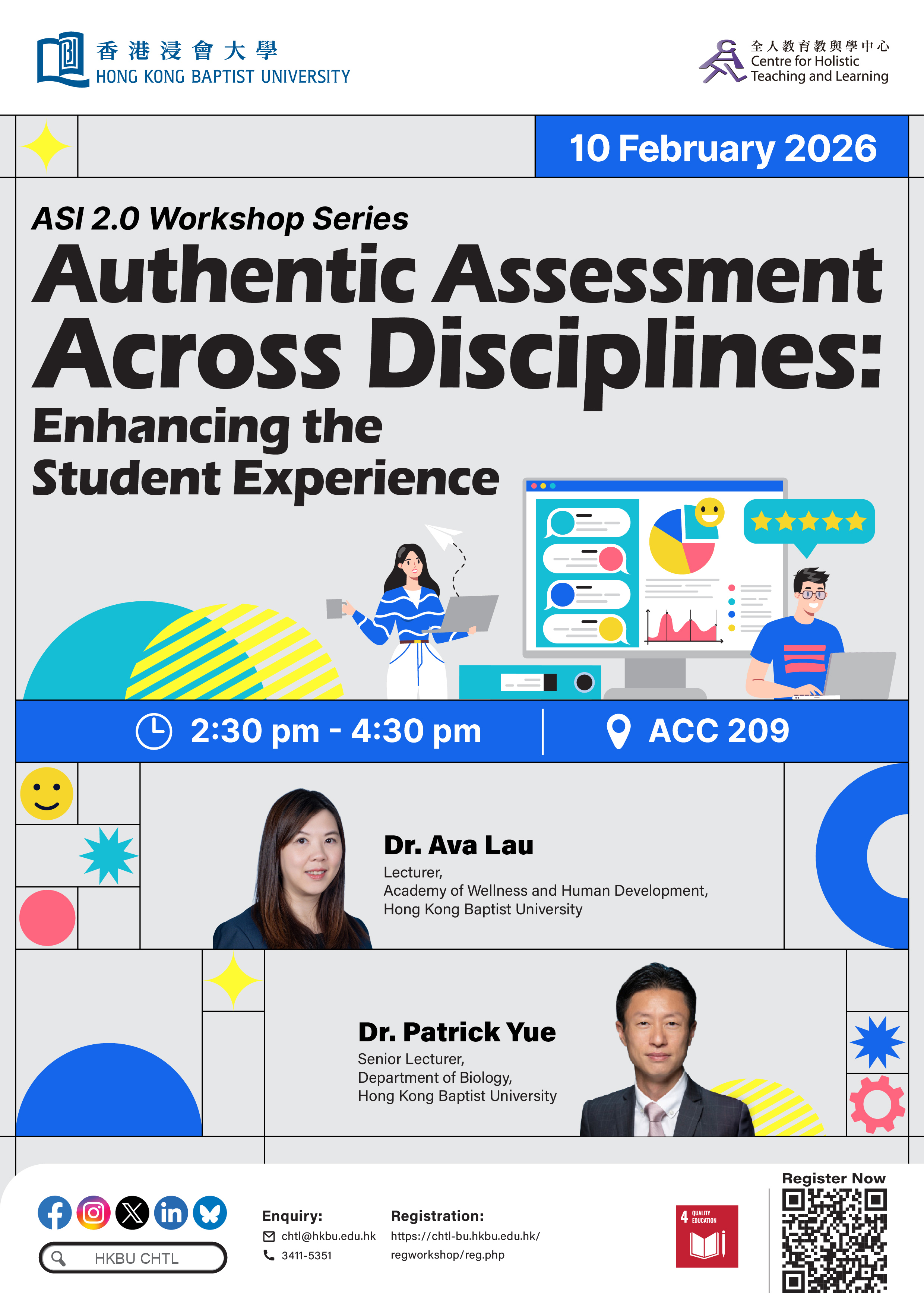
Dr Ava LAU
Lecturer, Academy of Wellness and Human Development, HKBU
Title:
Authentic Assessment in a social work curriculum: Reflections and lessons learned
Abstract:
This presentation reflects on the creation of authentic assessment in a core course within the Bachelor of Social Work (Hons) Programme. The course was developed through collaboration between social work academic and community partners. Students were introduced to social marketing as an approach to activities in social work that can address diversity and cultural differences.
The presentation examines the redeveloped course arrangements, focusing on the authenticity of the learning activities and assessment tasks. Assessment can be considered authentic if it resembles issues or activities that are realistic in the workplace or real-life situations the students may encounter (Burton, 2011, p. 21). Based on Burton’s (2011) definition, I conducted a trial implementation of authentic assessment, reflecting on my experiences as an authentic learning opportunity, and offering suggestions for involving community partners in social work education.
Dr Patrick YUE
Senior Lecturer, Department of Biology, HKBU
Title:
Case Sharing: BIOL3016 Environmental Health and Toxicology
Service-learning Project: “Little Corner · Little Link - Environmental Health Study of Sub-divided Units”
(小角落 · 小鏈接 - 劏房的環境健康研究)
Abstract:
In this presentation, we will share the experience on conducting the service-learning project in BIOL3016 Environmental Health and Toxicology. Subdivided units (SDUs) commonly refer to the subdivision of a flat as shown on the original approved plan of a building into two or more individual rooms. Hong Kong has about 110,000 SDUs that house about 220,000 residents. Apart from the irregularities of building works associated with SDUs, overcrowded space and environmental hygiene of SDUs have long become a topic of concern. To provide a deeper understanding of the realities faced by residents of SDUs, BIOL3016 students conduced a service-learning project last year. They performed comprehensive assessments covering air and water qualities and household hygiene in SDUs. To draw a comparative analysis of the hygiene levels between SDUs and typical households, the students also collected environmental samples from their own homes. Moreover, they interviewed SDU residents to gain deeper insights into the challenges and difficulties faced in their daily lives. The findings enabled them to realize that hygiene is largely influenced by personal habits rather than living space. This interdisciplinary and community-collaborative service-learning initiative provided a chance for applying lecture knowledge, enhanced students’ learning effectiveness and attitudes and cultivated their sense of social responsibility.
Sustainable Development Goals (SDG) Mapping
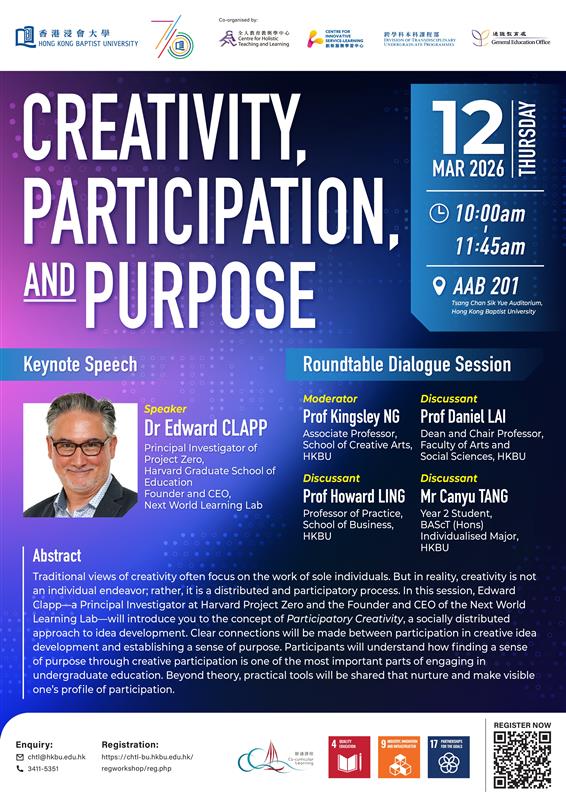
Keynote Speaker:
Dr Edward CLAPP
Principal Investigator, Project Zero at Harvard Graduate School of Education
Founder and CEO, Next World Learning Lab
Roundtable Dialogue Discussants:
Prof Kingsley NG (Moderator)
Associate Professor, School of Creative Arts, HKBU
Prof Daniel LAI
Dean and Chair Professor of Faculty of Arts and Social Sciences, HKBU
Prof Howard LING
Professor of Practice, School of Business, HKBU
Mr Canyu TANG
Year 2 Student, BAScT(Hons) Individualised Major, HKBU
Abstract:
Traditional views of creativity often focus on the work of sole individuals. But in reality, creativity is not an individual endeavor; rather, it is a distributed and participatory process. In this session, Edward Clapp—a Principal Investigator at Harvard Project Zero and the Founder and CEO of the Next World Learning Lab—will introduce you to the concept of Participatory Creativity, a socially distributed approach to idea development. Clear connections will be made between participation in creative idea development and establishing a sense of purpose. Participants will understand how finding a sense of purpose through creative participation is one of the most important parts of engaging in undergraduate education. Beyond theory, practical tools will be shared that nurture and make visible one’s profile of participation.
Sustainable Development Goals (SDG) Mapping
Facilitator:
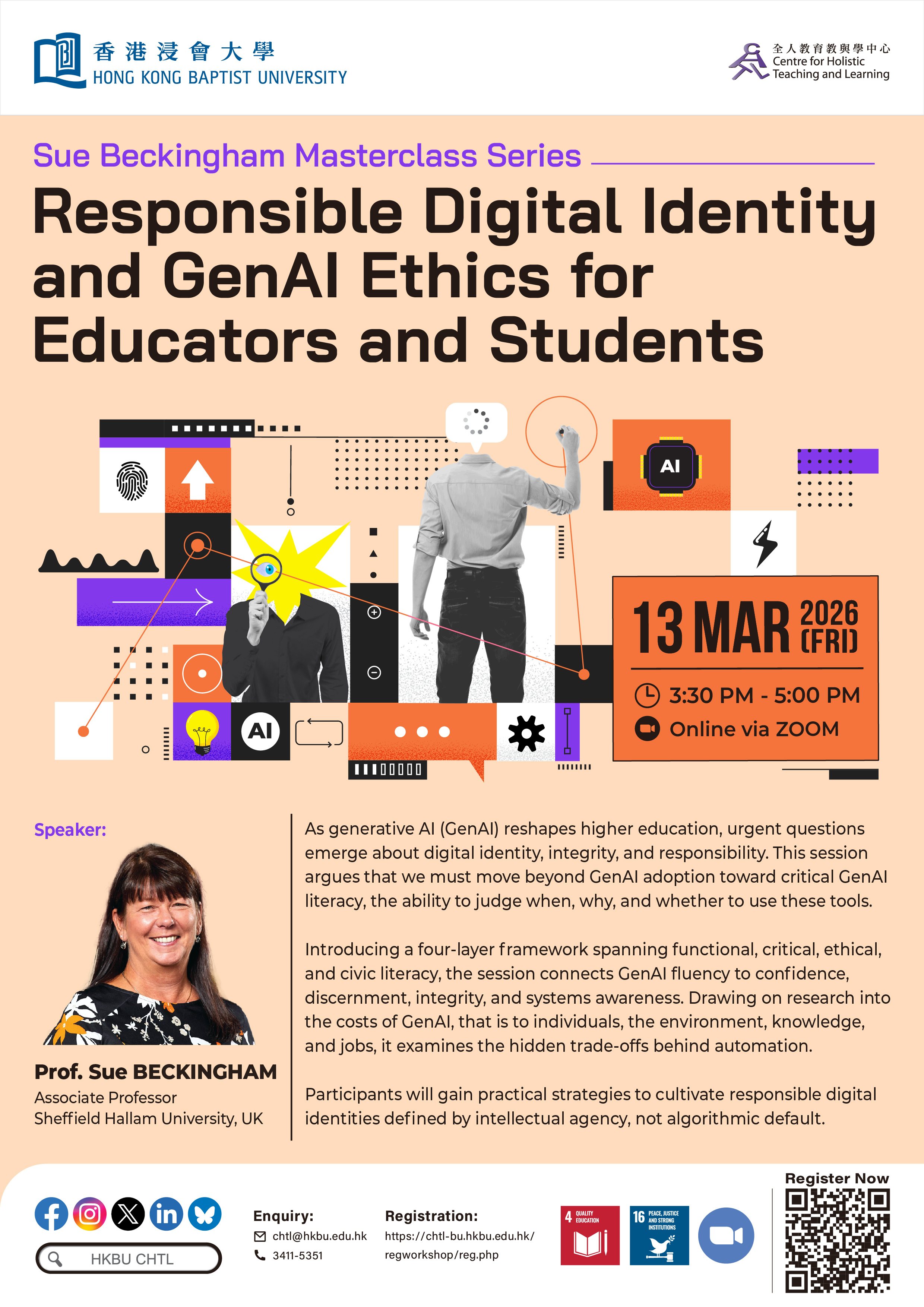
Prof Sue BECKINGHAM
Sheffield Hallam University, UK
Abstract:
As generative AI (GenAI) reshapes education, work, and everyday life, educators and students face urgent questions about digital identity, ethical AI use, and long-term responsibility. This talk explores how to navigate online presence and academic integrity in an era where AI tools are powerful, accessible, and often invisible. It argues that we must move beyond GenAI adoption toward critical GenAI literacy: the capacity to assess appropriateness, risk, authorship, sustainability, and long-term impact.
To support this shift, I introduce a four-layer framework for GenAI literacy in higher education moving from functional (technical competence), to critical (intellectual discernment), to ethical (professional responsibility), and ultimately civic literacy (social and environmental accountability). This model positions GenAI fluency not simply as tool use, but as the cultivation of confidence, curiosity, integrity, agency, and systems awareness.
Drawing on research into the four key costs of GenAI which are costs to the individual, the environment, knowledge, and jobs, we will examine the hidden trade-offs behind convenience and automation. Participants will gain practical strategies for cultivating responsible digital identities, making informed decisions about when and why to use GenAI in academic and professional contexts, and fostering ethical digital cultures within institutions.
This session provides educators and students with the intellectual frameworks and actionable tools needed to engage with GenAI thoughtfully, sustainably, and responsibly, ensuring that students develop a digital presence defined by intellectual agency rather than algorithmic assistance.
Sustainable Development Goals (SDG) Mapping
Facilitators:
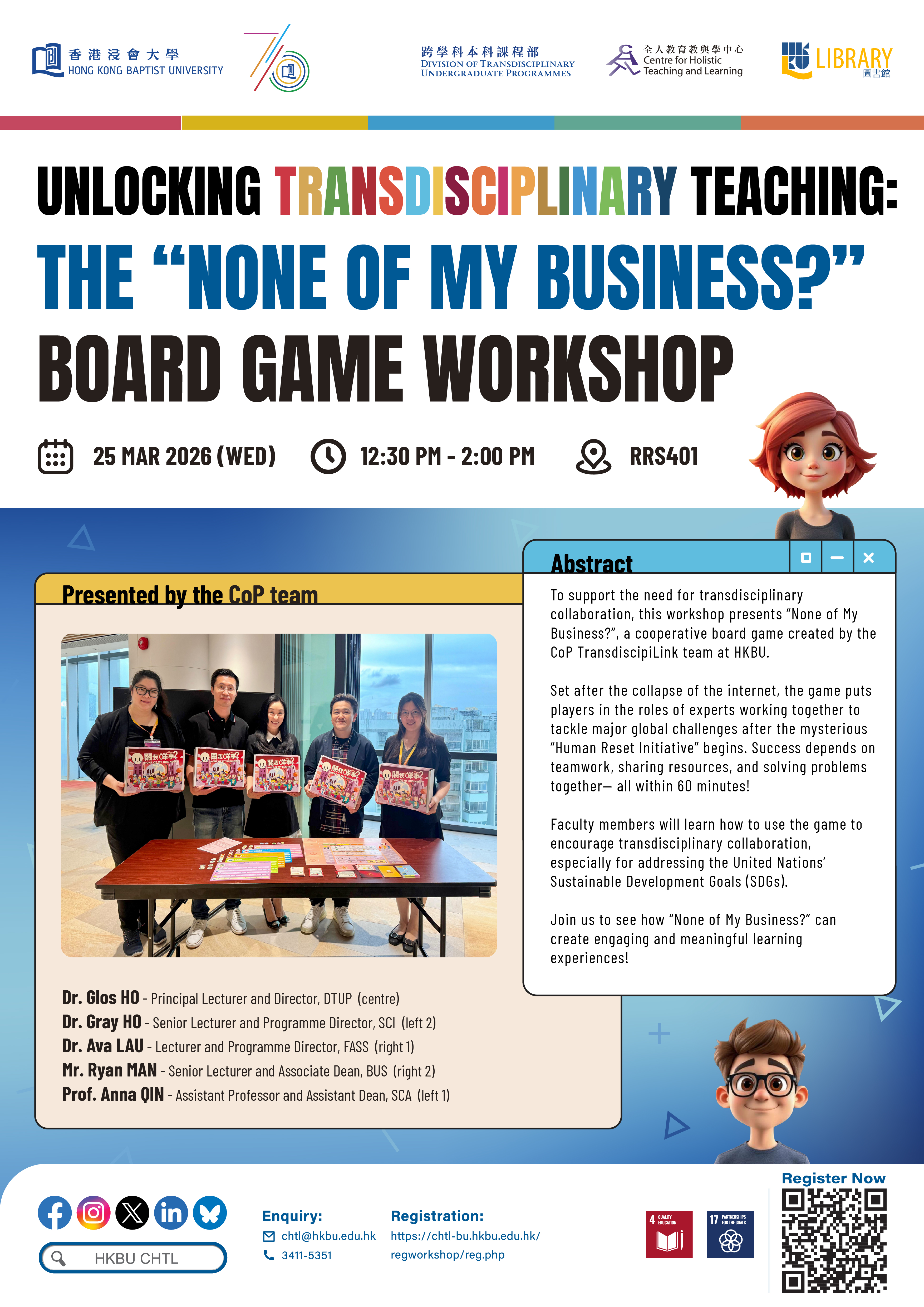
Dr Glos HO
Principal Lecturer and Director, DTUP
Dr Gray HO
Senior Lecturer and Programme Director, SCI
Dr Ava LAU
Lecturer and Programme Director, FASS
Mr Ryan MAN
Senior Lecturer and Associate Dean, BUS
Prof Anna QIN
Assistant Professor and Assistant Dean, SCA
Abstract:
To support the need for transdisciplinary collaboration, this workshop presents “None of My Business?”, a cooperative board game created by the CoP TransdiscipiLink team at HKBU.
Set after the collapse of the internet, the game puts players in the roles of experts working together to tackle major global challenges after the mysterious “Human Reset Initiative” begins. Success depends on teamwork, sharing resources, and solving problems together— all within 60 minutes!
Faculty members will learn how to use the game to encourage transdisciplinary collaboration, especially for addressing the United Nations’ Sustainable Development Goals (SDGs).
Join us to see how “None of My Business?” can create engaging and meaningful learning experiences!
Sustainable Development Goals (SDG) Mapping
Speakers:
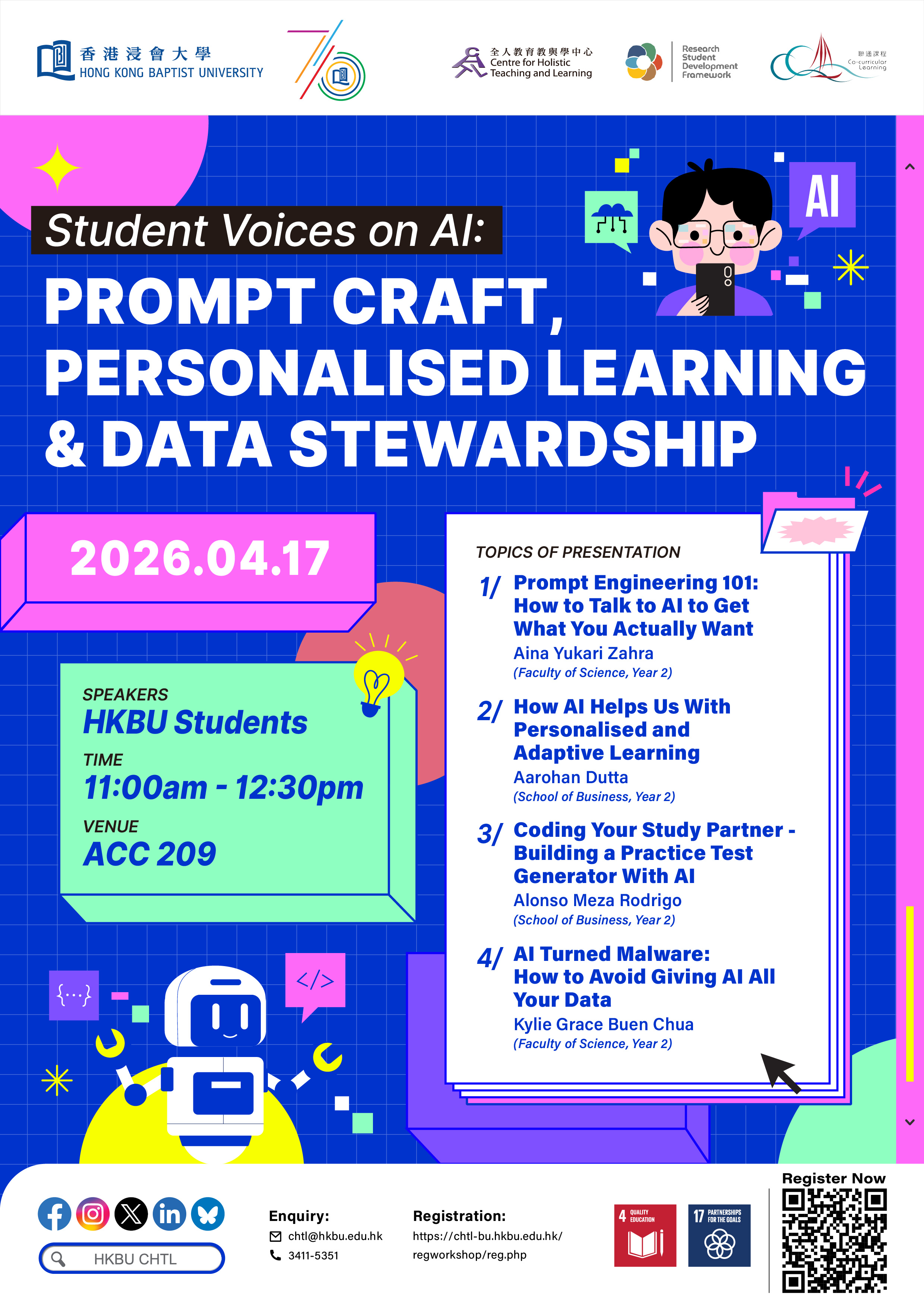
Aina Yukari ZAHRA
Rodrigo ALONSO MEZA
Kylie Grace Buen CHUA
Aarohan DUTTA
Abstract:
How are students really using AI in their learning and daily lives? This student-led workshop brings together authentic perspectives to showcase innovative, practical, and responsible uses of AI. Both teachers and students are welcome to join.
These student stories provide a grounded view of AI’s real-world impact, highlighting opportunities, challenges, and the importance of using AI ethically and mindfully.
Join us to hear directly from students shaping the future of AI in education.
Sustainable Development Goals (SDG) Mapping
Speaker:
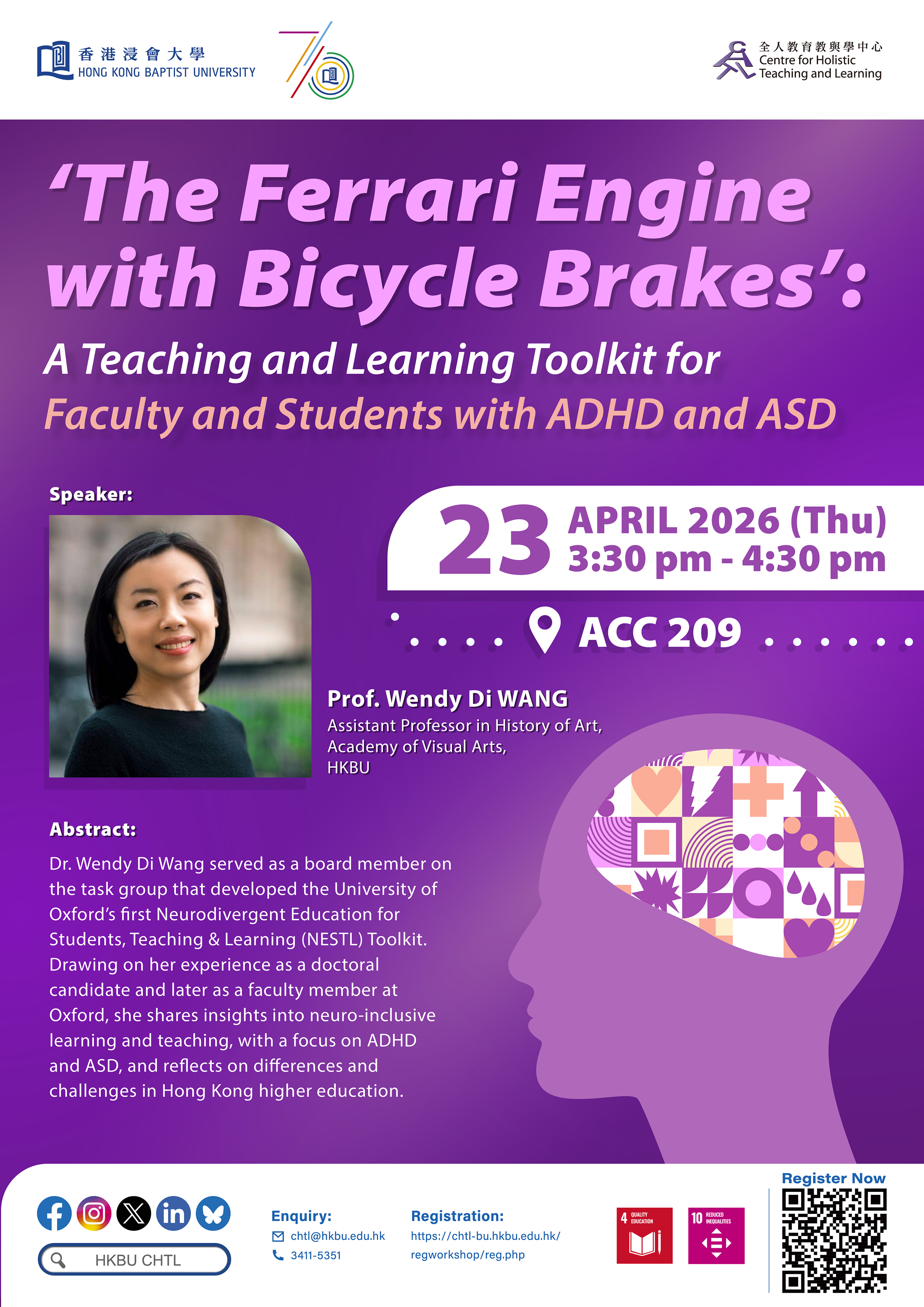
Prof Wendy Di WANG
Assistant Professor in History of Art, Academy of Visual Arts, HKBU
Abstract:
Dr. Wendy Di Wang served as a board member on the task group that developed the University of Oxford’s first Neurodivergent Education for Students, Teaching & Learning (NESTL) Toolkit. Drawing on her experience as a doctoral candidate and later as a faculty member at Oxford, she shares insights into neuro-inclusive learning and teaching, with a focus on ADHD and ASD, and reflects on differences and challenges in Hong Kong higher education.
Sustainable Development Goals (SDG) Mapping
Speaker:
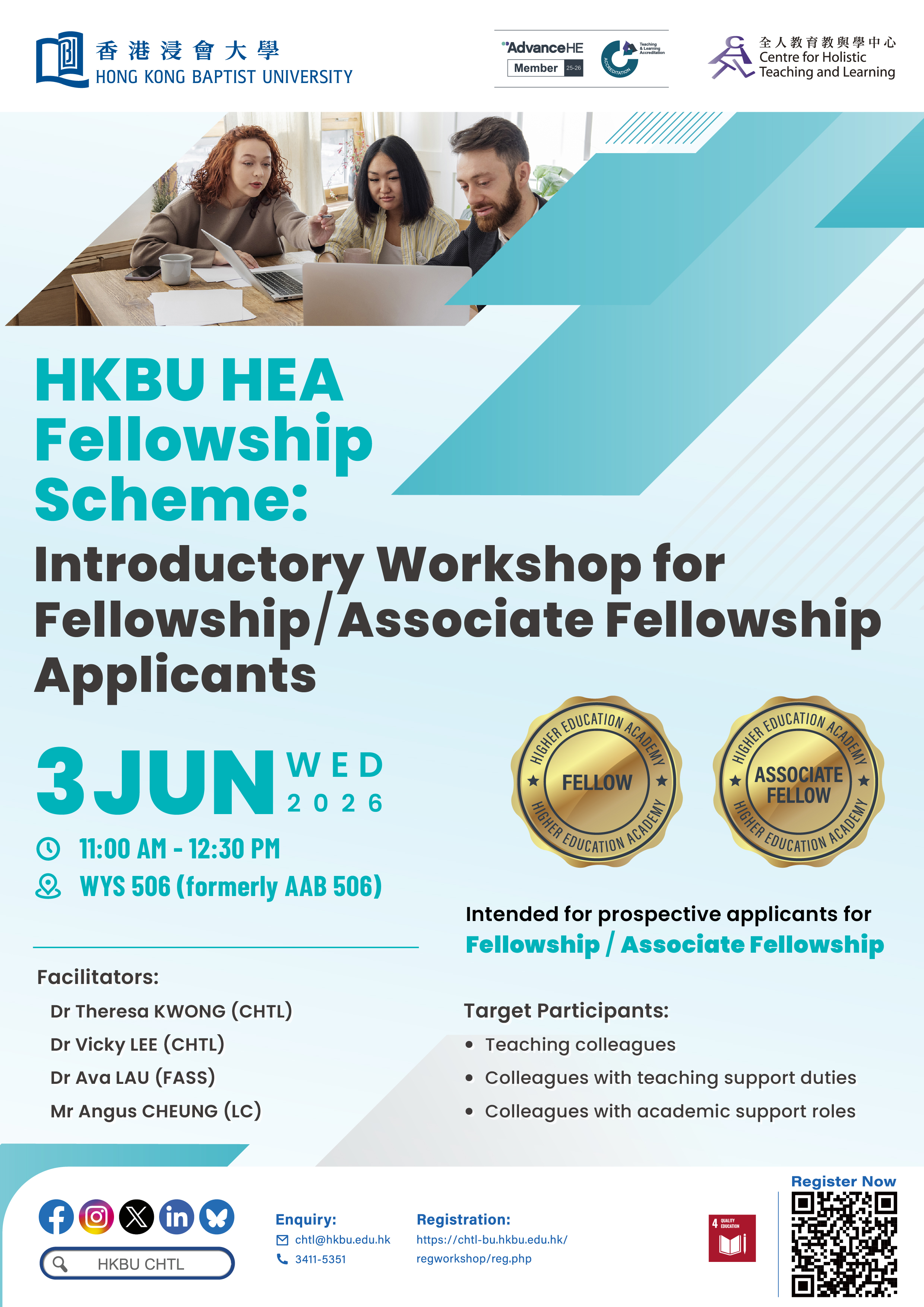
Dr Theresa KWONG (CHTL)
Dr Vicky LEE (CHTL)
Dr Ava LAU (FASS)
Mr Angus CHEUNG (LC)
Sustainable Development Goals (SDG) Mapping
Speakers:
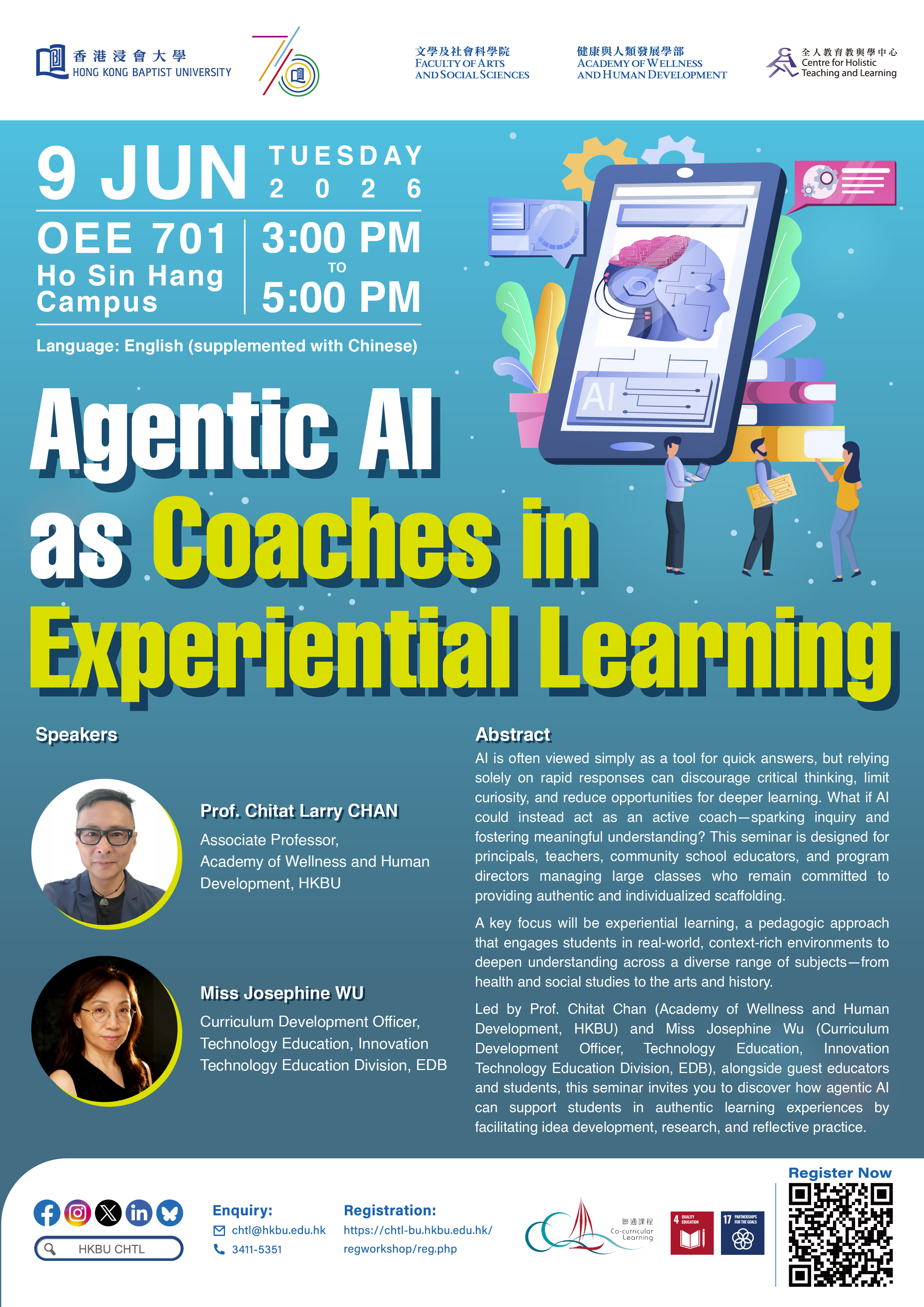
Prof Chitat CHAN
Associate Professor, Academy of Wellness and Human Development, HKBU
Miss Josephine WU
Curriculum Development Officer, Technology Education, Innovation Technology Education Division, EDB
Co-organiser:
Department of Social Work, Faculty of Arts and Social Sciences (Academy of Wellness and Human Development)
Abstract:
AI is often viewed simply as a tool for quick answers, but relying solely on rapid responses can discourage critical thinking, limit curiosity, and reduce opportunities for deeper learning. What if AI could instead act as an active coach—sparking inquiry and fostering meaningful understanding? This seminar is designed for principals, teachers, community school educators, and program directors managing large classes who remain committed to providing authentic and individualized scaffolding.
A key focus will be experiential learning, a pedagogic approach that engages students in real-world, context-rich environments to deepen understanding across a diverse range of subjects—from health and social studies to the arts and history.
Led by Prof. Chitat Chan (Academy of Wellness and Human Development, HKBU) and Miss Josephine Wu (Curriculum Development Officer, Technology Education, Innovation Technology Education Division, EDB), alongside guest educators and students, this seminar invites you to discover how agentic AI can support students in authentic learning experiences by facilitating idea development, research, and reflective practice.
Sustainable Development Goals (SDG) Mapping